



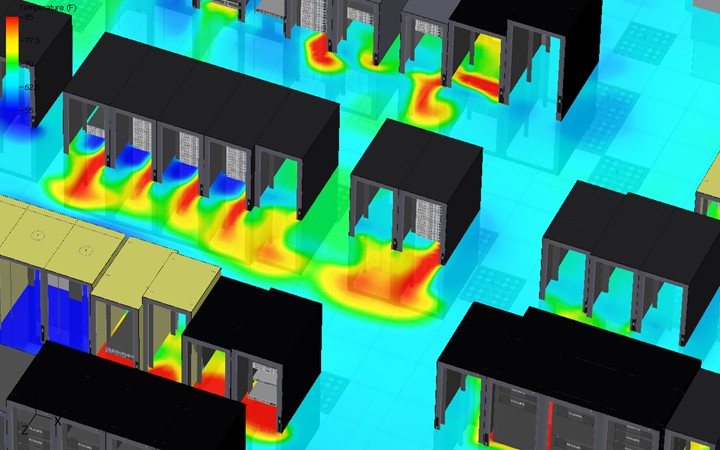
Misconceptions about what’s required to fix bypass airflow are what stop data center operators from improving cooling efficiencies.
Cooling is the second largest energy consumer in data centers, behind the equipment itself. There are vast opportunities in this area to improve energy efficiency, increase cooling capacity, and reduce carbon emissions by addressing bypass airflow.
Bypass airflow and its causes are not new or unfamiliar to the data center industry. But there are some big misconceptions about what’s required to resolve bypass airflow, so it often gets overlooked.
What is Bypass Airflow?
Bypass airflow is defined as any conditioned air supplied by a cooling unit that does not pass through IT equipment before returning to a cooling unit. This air escapes through cable cutouts, gaps in racks, inefficient equipment layout, etc.
The ideal for airflow in a computer room is for every molecule of conditioned air supplied by cooling units to pass through IT equipment just once before returning to a cooling unit. Any volume of air delivered by cooling units that is greater than the volume of air consumed by IT equipment becomes bypass airflow.
Bypass Airflow Misconception #1
The first misconception is that full containment is required to eliminate bypass airflow. While there’s no question that containment will yield the greatest improvements, it’s not a “cure all.” Rack changes, misuse of perforated floor tiles, and incorrectly installed equipment can all cause bypass airflow after the fact.
Bypass Airflow Misconception #2
A CFD study must be done to detect localized data center cooling issues. Not true. If you’re familiar with common trouble areas and have a way (or tool) to test those areas, you can verify for yourself whether cooling and/or exhaust is traveling in its intended direction or bypassing.
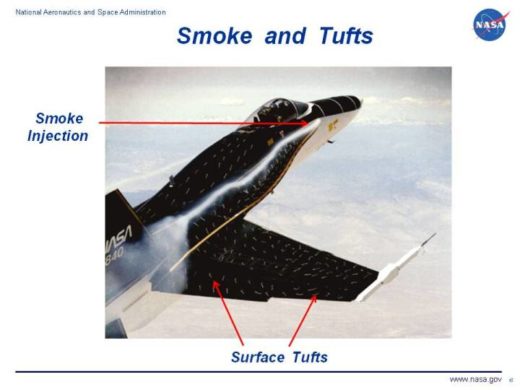
Tufting is a longstanding technique for airflow visualization in the automotive and aeronautics industries. The motion of the tufts can identify flow features such as boundary layer separation and reattachment. This is an inexpensive, yet very effective way to test airflow direction and strength.
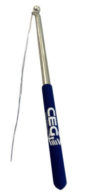
Tufting can be equally effective in the data center. By placing CEG’s Tuft Tool into airstream associated with common bypass airflow scenarios, you can verify for yourself if cooling and/or exhaust air is traveling in the right direction and at an appropriate velocity.
Bypass Airflow Misconception #3
Just like detection, fixing bypass airflow doesn’t always require an expensive and outsourced solution. In some cases, a facility manager can resolve bypass airflow issues without outside help. DIY improvements such as blanking panels, containment doors, or ceiling return plenums can go a long way in increasing cooling capacity.
Improving Cooling Efficiency is Key to Data Center Sustainability
With many data center operators committing to sustainability and net zero carbon by 2030, there is an urgent need to improve efficiencies throughout the operation. Since cooling is the second largest energy consumer in the data center, now is the time to quantify, understand, and improve cooling infrastructure.
CEG’s White Paper: Bypass Airflow in the Data Center identifies the most common scenarios that lead to bypass airflow; describes how to visualize bypass airflow and demonstrate it to others using the Tuft Tool; and offers affordable remediation suggestions.
0 Comments