



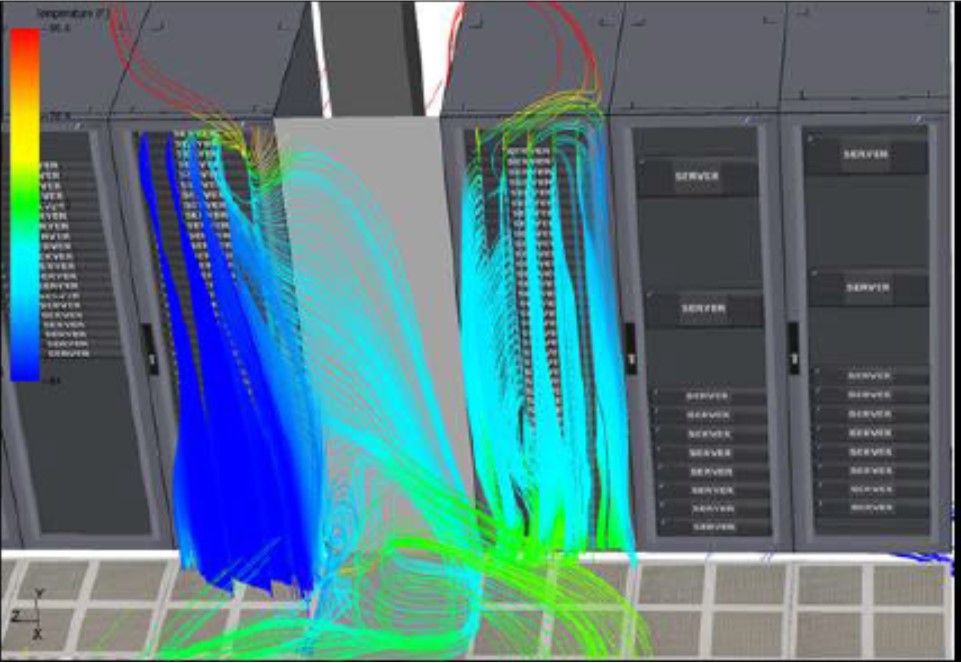
Cooling is the second largest energy consumer in data centers, behind the equipment itself. There are vast opportunities in this area to improve energy efficiency, increase cooling capacity, and reduce carbon emissions by addressing bypass airflow.
Bypass airflow and its causes aren’t new to the data center industry. But there are some misconceptions about how to address it: a) the only way to detect localized cooling issues is with a CFD study, and b) full containment is required to eliminate bypass airflow. Not true on both accounts. Detecting and fixing bypass airflow doesn’t always require a complicated solution. In some cases – particularly at rack level – a facility manager can make improvements without outside help.
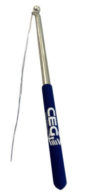
Tufting is a longstanding technique for airflow visualization in the automotive and aeronautics industries. CEG’s Tuft Tool extends this technique to the data center, allowing you to easily determine airflow direction and strength.
Gaps Between Rows of Racks
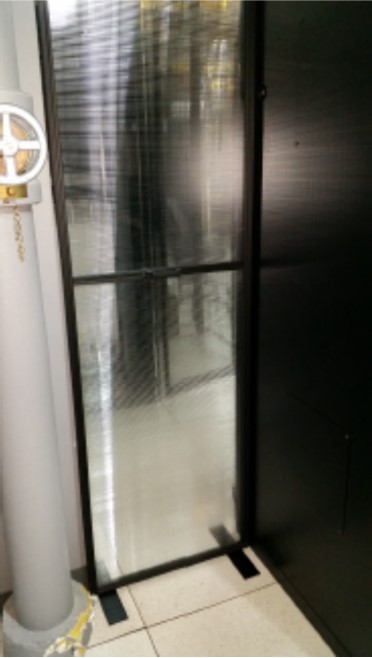
As data centers change and rightsize to meet computing needs, racks are frequently moved or removed. The resulting gaps allow hot exhaust air to wrap around the sides of the rack and recycle through the equipment. Even in a fully contained environment, gaps in your rack setup will create bypass airflow. To effectively resolve this, you should know which way the air is travelling and have an idea of its velocity.
Using the Tuft Tool: Stand off to one side of the gap. Extend the tool so its tufts are in the open space. If the threads move toward the front of the gap, hot exhaust air is intermixing into the cold aisle. If threads lift and move toward the back, you have cool air bypassing the equipment. You may even be overprovisioning cooling in that space.
The Fix: A “wall” is needed in that gap, and CEG’s aislePRO™ vertical panels are a quick and simple solution. With the measurements you provide, CEG can design and manufacture the highest-quality panels for your unique environment. Along with the panels, CEG ships an easy install kit that includes angled brackets to screw into the cabinet and floor. We also offer freestanding panels with a handle in the middle for easy placement.
Open Rack Units
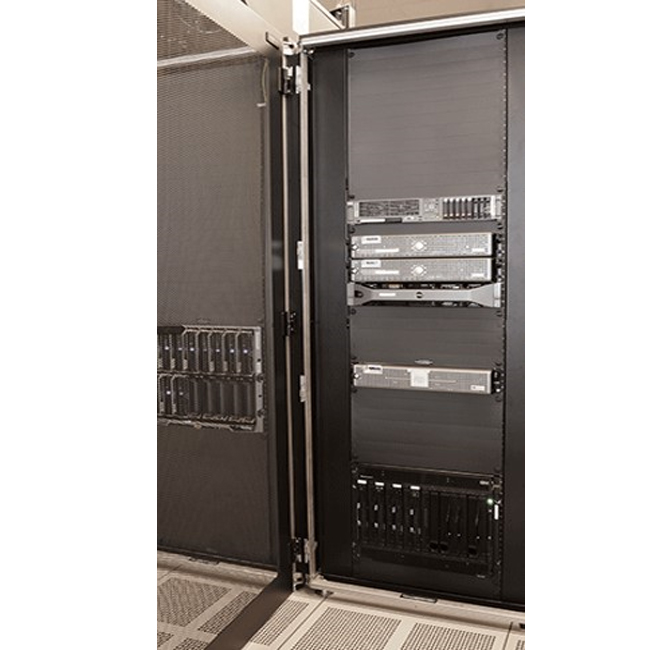
Just as racks move to accommodate ever-changing computing requirements, open rack units are also a common occurrence. These open spaces will have hot air coming to the front, cold air traveling to the back, or a mix of both.
Using the Tuft Tool: Place the tool into the open rack space. If threads move toward the front or the back, bypass airflow is occurring.
The Fix: Blanking panels are a quick and inexpensive solution. Placing blanking panels in the open rack units prevents hot exhaust air from recycling through equipment inlets. Blanking panels also prevent the cooling air from bypassing IT gear.
Addressing Bypass Airflow is Easier Than You Think
An expensive, outsourced solution is not always necessary to address bypass airflow and improve cooling infrastructure. While there’s no question that containment will yield the greatest improvements, it’s not a “cure all.” Rack changes, misuse of perforated floor tiles, and incorrectly installed equipment can all cause bypass airflow after the fact.
DIY measures like aislePRO™ barrier panels, blanking panels, and CEG’s Tuft Tool can go a long way in increasing cooling capacity and decreasing a data center’s carbon footprint.
Want more affordable remediation suggestions at the rack, row, raised floor, and room level? Download our white paper: Bypass Airflow in the Data Center: Simple Detection & Solutions to Improve Efficiency, Capacity, Sustainability.
0 Comments